State of the Seed Market – September 2025

I read Rob Go’s thread and follow-up post about seed investing facing an existential crisis and wanted to share an alternative point of view.

It is the best time to be a seed investor.

It will never be worse to be a seed investor than it is today.

Looking Back: The Early Days

When True Ventures started in 2005, the consensus was that the internet was dead. Seed investing as we know it didn’t exist; institutional investors didn’t believe in it as a valuable asset class. The prevailing market belief was, “you don’t get paid for taking seed stage risk.”

True Ventures Fund I’s return model assumed there would be a handful of companies started on the internet each year worth $500 million – and that True Ventures would invest in two of those companies per fund.

While my partners who started True were not the only investors with this insight (First Round Capital, USV, Floodgate, and Y Combinator all started around the same time) – the market was tiny and mostly filled with individual angel investors and small funds.

According to Crunchbase, the entire seed stage venture capital market was only ~$500 million in 2007.

So while the total supply of venture capital dollars was small, the opportunity set for seed stage investments was similarly small. 

The next set of foundational horizontal platforms were just emerging—AWS launched in 2006 and the iPhone launched in 2007– but it took time for them to mature and for founders to learn how to build on them efficiently. Open-source technologies and social distribution channels would similarly lower the cost to experiment with new product ideas.

By the time I joined True in 2010, it felt like the seed stage venture capital market was hitting its stride. 

Mobile, cloud, and social were creating an explosion of new opportunities for founders to build products that were never before possible. These products, built on existing infrastructure, addressed much larger markets than expected, with revenue growing faster than expected.

True Ventures’ Funds II, III, and IV experienced large successful outcomes, including companies in consumer media (Goodreads, WordPress), enterprise software (Connectifier, Cetas, Assistly), infrastructure software (Duo Security, HashiCorp), and consumer hardware (Fitbit, Ring, Peloton), just to name a few.

My Framework for Thinking About This Business

With that context, my framework is simple. Our primary input is new investable opportunities, which are a function of a founding team and a new idea. I believe each new idea combines two existing ideas in novel ways.

A major driver of this is new horizontal technology platforms, but all ideas are valuable in that they grow the supply of other new ideas in a combinatorial way. This means the supply of potential ideas is infinite and constantly growing, as are the potential businesses that combine existing concepts to solve new problems for customers.

Therefore, the scarcest resource isn’t ideas—it’s creative, high-quality founding teams that can execute. 

Compared to 2006, the barriers to starting a company have fallen dramatically:

  • Social Acceptance: Founding a company is now a respected career path.
  • Deeper Talent Pool: The number of experienced, repeat founders is larger than ever.
  • Accessible Knowledge: An incredible wealth of best practices information is available online and through programs to help founders get started.

This increases the total number of high-quality founders starting companies each year.

Why Now Is Different

While there’s way more supply of seed capital, the quantity of quality investable opportunities is also way higher.

Additionally, potential terminal value of companies we’re investing in today is way larger – definitely larger than the expected valuations of the social + cloud + mobile era (which investors assumed would be $500 million), but I’d argue will end up being larger than the valuations we actually saw in that era ($5 billion to $50 billion).

This is true for a simple reason: innovation compounds.

Just as the last wave of innovation built on infrastructure from prior waves, this next wave will build on top of all the existing infrastructure built over the past 50 years.

Right now, we’re seeing incredible horizontal technologies mature:

– Deep Learning
– Biotech
– Blockchain infrastructure

Each of these alone will support massive new companies. There are opportunities to build large companies using combinations of these technologies.

I’ve never been more excited about the quality and quantity of opportunities we’re seeing. We invest in companies when they may seem uninteresting (that is the magic of our business model) but when they start to mature, it becomes clear why they’re exciting: 

Enveda

Enveda highlights this trend perfectly by combining one of humanity’s oldest technologies (natural medicine) and one of its newest (AI) to create a completely new path for drug discovery for challenging diseases. The platform harnesses nature’s complexity with cutting-edge advancements in knowledge graphs, machine learning, and metabolomics.

What makes Enveda particularly compelling is how it combines AI with one of humanity’s oldest sources of medicine – plants. For thousands of years, traditional medicine has used natural compounds to treat disease, but the pharmaceutical industry has largely moved away from nature-derived drugs due to the complexity of identifying and developing these molecules at scale.

Enveda’s AI platform can analyze the chemical fingerprints of medicinal plants, predict which molecules might be therapeutically active, and understand how they work in the human body – all before expensive lab work begins. This represents a fundamentally new approach to drug discovery that leverages both the wisdom embedded in traditional medicine and the power of modern AI to identify promising compounds that would have been impossible to discover through conventional screening methods.

The Nuclear Company

The Nuclear Company is tackling a massive infrastructure challenge by combining proven physics with modern, scalable construction techniques. The company is focused on the construction of fleet-scale nuclear reactors to help meet global energy demands.

The energy landscape in the United States is facing a critical inflection point. Data centers powering AI workloads are projected to consume between 7% and 12% of total U.S. electricity by 2028, up from 4% in 2023. Meanwhile, the push toward electrification of transportation, heating, and industrial processes is driving electricity demand growth at rates we haven’t seen in decades.

Renewable sources like solar are critical but intermittent – and the scale of additional baseload power needed is staggering. The U.S. electricity market represents roughly $400 billion in annual revenue and meeting projected demand growth will require trillions of dollars in new infrastructure investment over the next two decades.

Nuclear power is the only proven technology that can deliver carbon-free baseload electricity at the scale required. Yet the traditional nuclear industry has been plagued by decades-long construction timelines and massive cost overruns. The Nuclear Company is attacking this problem with a fundamentally different approach – focused on larger projects, best practices in construction, and replication

This represents exactly the type of massive infrastructure opportunity where the combination of proven physics, new manufacturing approaches, and urgent market need creates the potential for generational companies.

Moderne

Moderne demonstrates how new platforms create entirely new capabilities, in this case by leveraging AI to solve the compounding problem of code complexity at enterprise scale. The company accelerates software development through organization-wide code search and transformation. The company enables engineering teams to understand, refactor, and maintain massive codebases at scale – turning what used to be months-long migration projects into automated transformations that happen in days.

Think about the challenges every large engineering organization faces: legacy code that needs to be updated, security vulnerabilities that need to be patched across hundreds of repositories, and framework migrations that require touching thousands of files. Moderne’s platform can automatically discover, analyze, and transform code across an entire organization’s codebase, regardless of programming language or repository structure.

What makes this particularly exciting is the timing – as AI development accelerates, the ability to programmatically understand and modify code becomes a competitive advantage. Organizations that can evolve their software infrastructure faster will be better positioned to adopt new technologies and respond to market changes.

Final Thoughts

Rather than view the current moment through a lens of scarcity, my lived experience of the past 15 years points to an incredible moment of abundance in company creation.

In fact, I’d even go a step further and argue that very early stage company creation remains underfunded.

I’d love more programs like Y Combinator, a16z Speedrun, South Park Commons, and Betaworks to exist. I’d love more seed managers to be in business – more capital will fund more opportunities and more experiments will lead to more new ideas and more experienced founders.

However, an abundance of opportunity doesn’t guarantee success for everyone. Every venture capital business is different – and to be successful, each needs its only specific business model and edge. In this environment, managers who lack a clear viewpoint on portfolio construction and a unique differentiation will likely struggle. The explosion of enterprise value over the next 30 years will not lift all boats equally.

Finally, while this post focuses on the opportunity set with new horizontal technologies today (where I think we have 10+ years to invest in applications built on top of these maturing technologies), I continue to bet on continued human ingenuity. I believe we will continue to develop new horizontal technologies and to see ambitious founders combining those technologies in new ways to go after increasingly larger market opportunities.
Incentives Matter (Or a Proposal for DAOs to Get Excited about Paying Commercial Vendors)

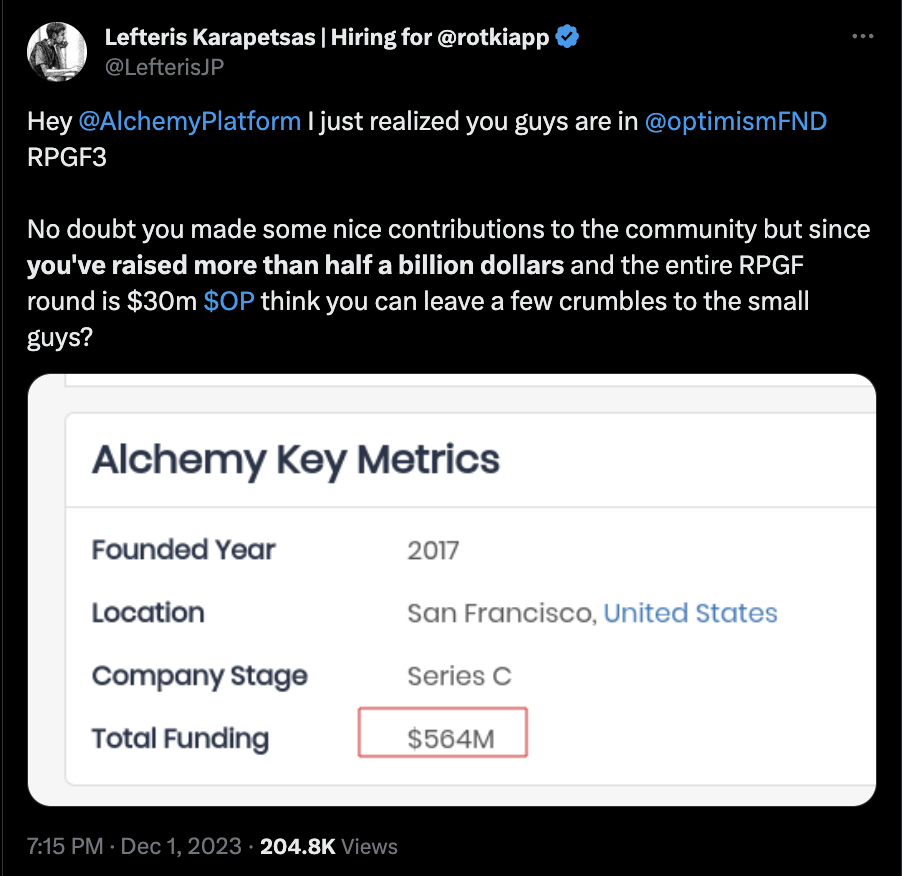
As part of the recent Optimism Retroactive Public Goods funding program – there was a discussion that startups with large amounts of venture funding shouldn’t apply

Image

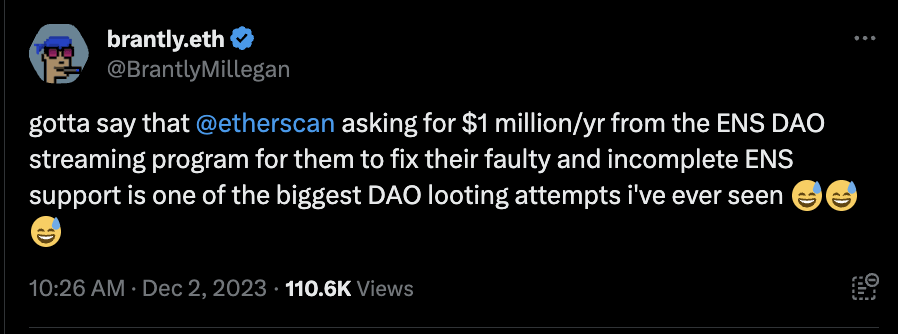
This isn’t the first time a discussion like this has happened – and I think broadly reflects push back in public governance related to paying commercial entities large fees related to software and services they want to provide to protocol communities

Image

With roles as both a generalist venture capital investor (who invests in crypto) and an enthusiast for the potential of DAOs as a new social technology – I want to make the argument that rather than discourage these companies – we should encourage this activity – and even more – figure out ways to make it easier for companies selling software and services – to sell into and support DAOs as customers

1.

While companies in new industries often start vertically integrated – over time, as markets mature – early entrants in the market benefit from new suppliers and ecosystem participants entering to provide software and services across multiple players

Rather than need to build every component of their system, the company can focus on the key features that they’re best at – and benefit from the competition from other new entrants competing to support them – as well as the shared learnings those companies receive from working across multiple customers

2.

In the software industry, one example of this is related to IT spend – software companies could develop all of the software they need to run their own business – but rather than do that – they often buy software from other commercial vendors that focus on the specific problem to be solved – this report from 2020 shared that IT spend by software companies was almost 25% of the customer’s spend by revenue

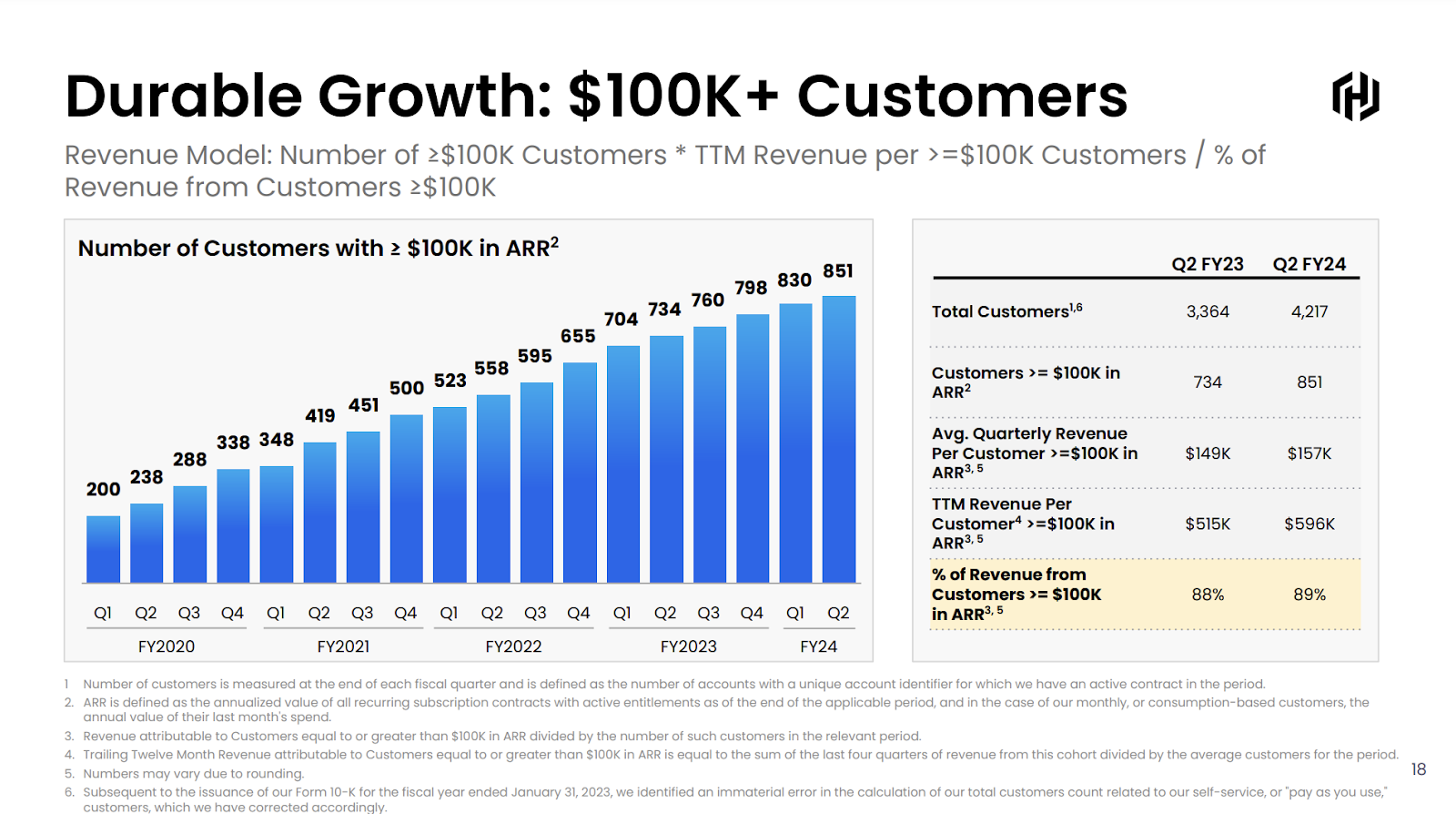
And by company – some of these deals can be quite large – as one example – HashiCorp disclosed having over 800 customers spending more than $100k per year with them (and had previously disclosed that they have one customer who spends more than $10 million a year with them)

Image

3.

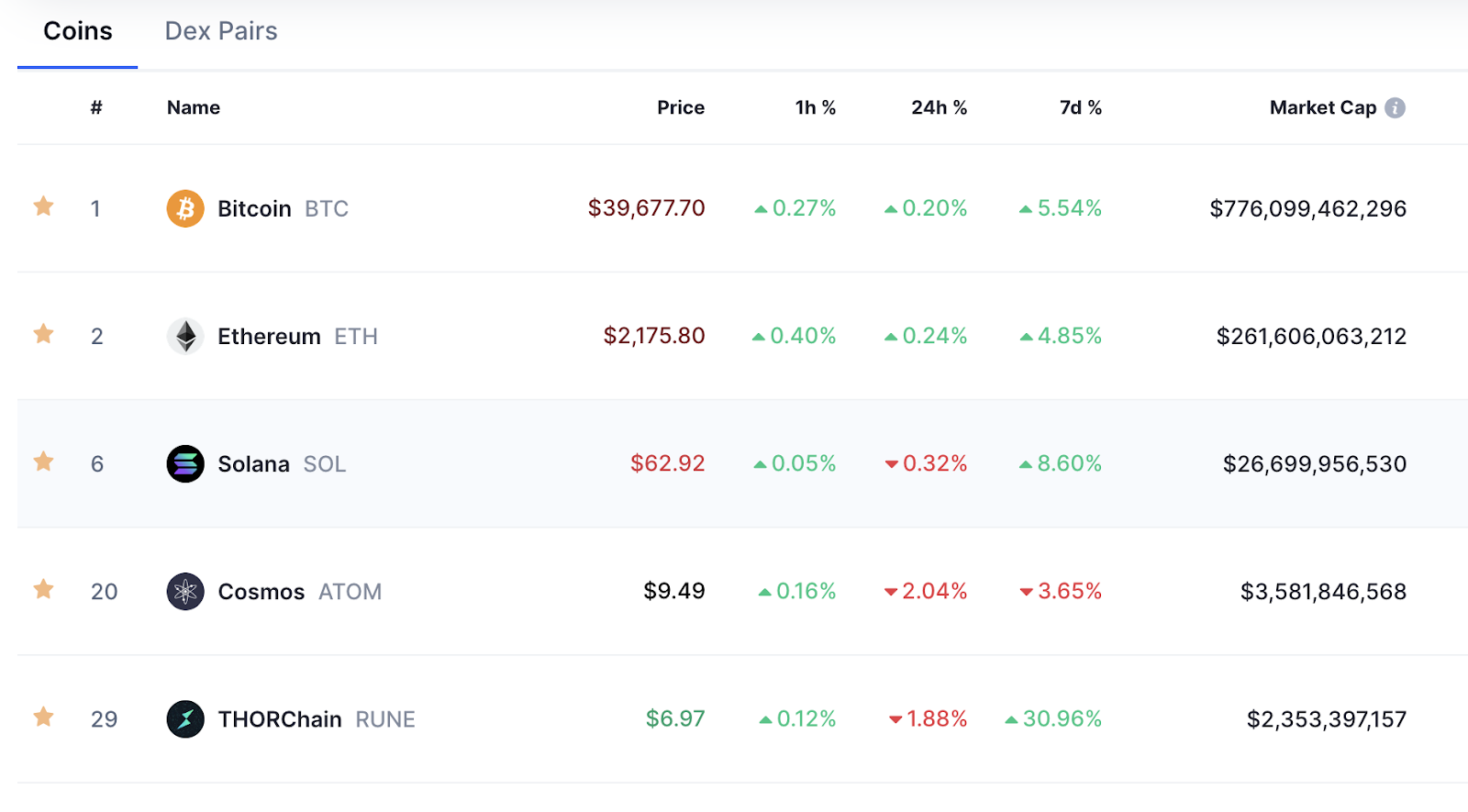
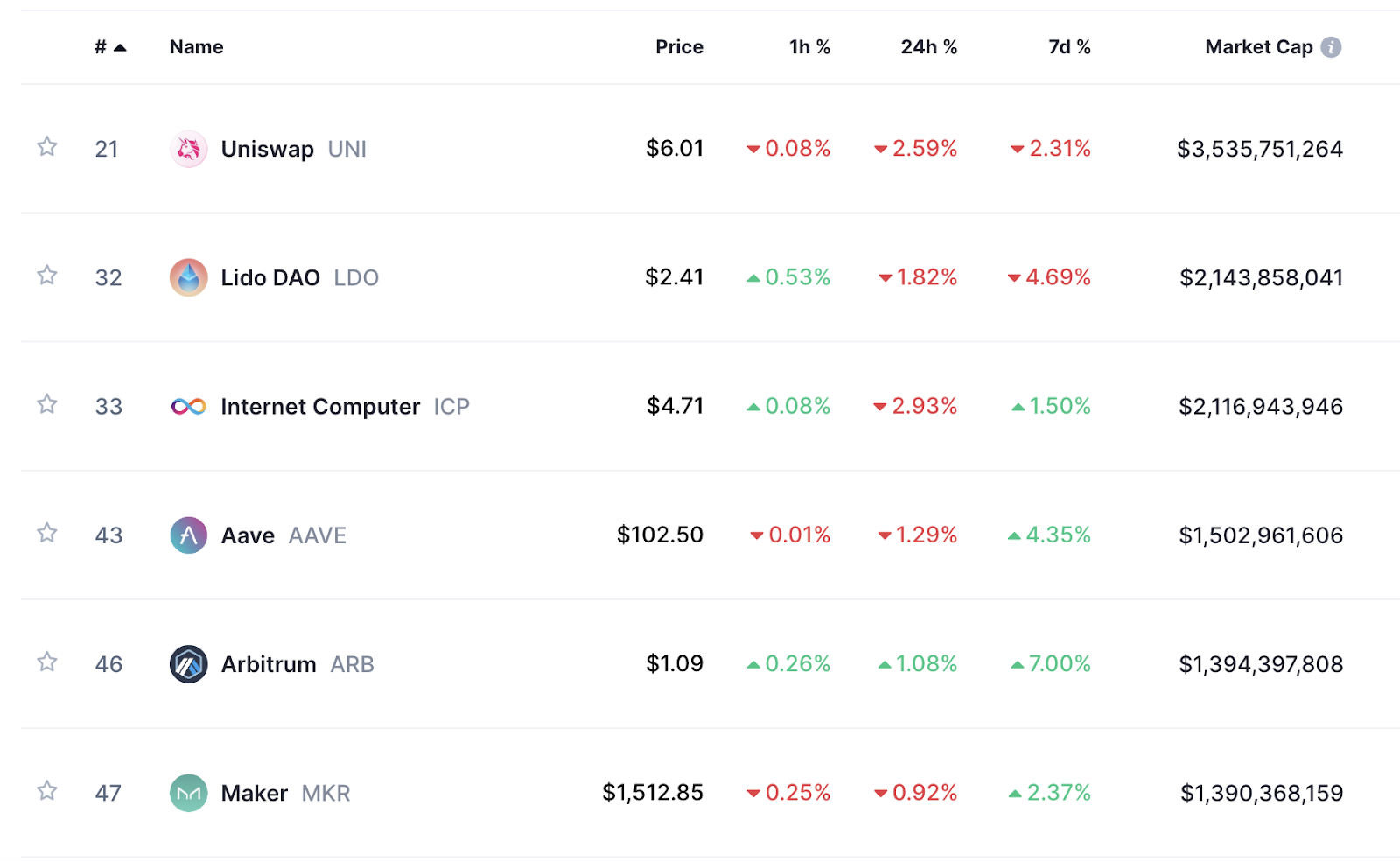
I think of the broadest definition of DAOs, which I’d argue is uses blockchain as a social technology – which uses the economic incentives of the network to drive user behavior (which would include L1 blockchains like Bitcoin, Ethereum, and THORchain) as well as the more narrow definition of DAOs (where token holders may be able to vote and participate in governance – including projects like Yearn Finance, Autonolous, and Hair DAO)

Under either of these definitions – these ecosystems are large:

Image
Image

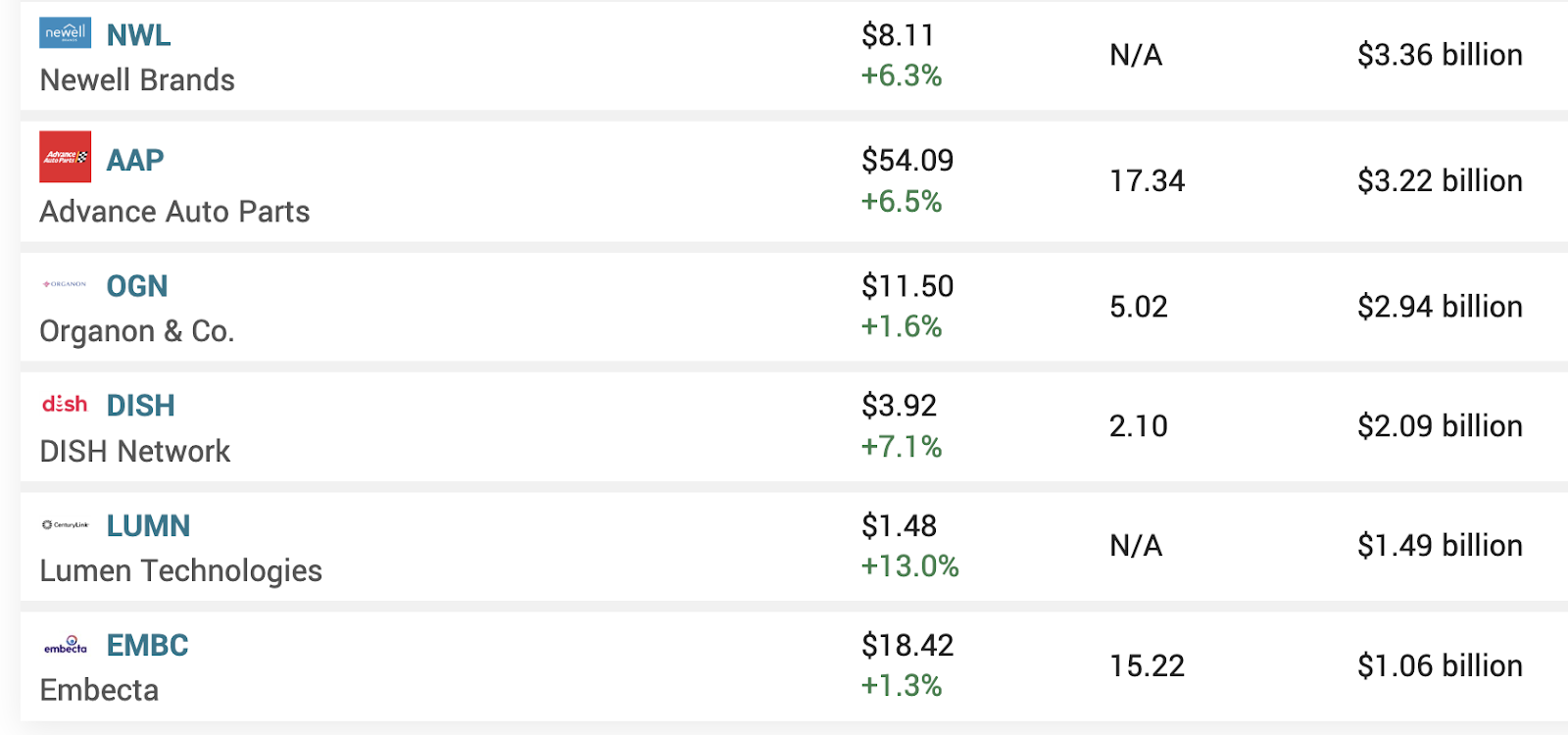
And are the size (or larger) of companies included in the S&P 500 index (bottom of the list here):

Image

4.

So while DAOs should continue to support small open source projects and internal teams – if we want the industry to mature – I’d argue that we want to support companies building software and services to support the growth of these ecosystems

A.

I think we want more founders starting companies to sell software and services into these ecosystems – to support projects themselves and developers building on top

If startups like Etherscan, Gauntlet, Coordinape, and Flipside Crypto are successful selling software into these ecosystems (and as such building valuable businesses) – more individuals will think about starting companies to sell into DAOs – bringing in more competition and better offerings for DAOs

B.

The opposite is also true – if the only way to generate new economic value is by launching a new protocol (or selling into centralized foundations) – founders will only focus there – which I think ultimately will make it harder + take longer for these ecosystems to be successful

C.

As a VC investor – I realize that my opinion is incredibly biased – but I also think we’re all collectively aligned – I think more startups building software + services to sell into DAOs are successful – it will increase the likelihood and speed of DAOs (both layer one blockchains and projects building on top of those ecosystems) being successful

(And – I’d argue for new emerging ecosystems that are competing for developers (eg L2s) or new applications competing for users – the ability to effectively use outside software and services – may become a competitive advantage – allowing them to grow more quickly and effectively than their competitors)

D.

But – what I’m most excited about is what happens next – once we get comfortable with DAOs purchasing large software contracts – we get to experiment with innovative new, DAO-native business models

(As a related plug – please check out Community Enabled Analytics from Flipside Crypto – which uses yield from token delegations to support new user acquisition and retention for its protocol customers.

I’m biased, but think this program has the ability to help base layer protocols and decentralized projects drive their business goals – but has been criticized in similar public commentary)

5.

If you liked this content, you may also like my post on “The Symbiotic Relationship Between Corporations and DAOs” or my post on “How Blockchain Infrastructure Is Unlocking Economic Value”

True (nor I) are an investor in Alchemy or Gauntlet – True (or I) may be an investor in all of the other crypto protocols and startups mentioned by me in this post

Money Out of No Where: How Blockchain Infrastructure is Unlocking Economic Value

In 2019, Bill Gurley wrote a blog post on how internet marketplaces can unlock latent and previously unseen value in the world

In the post, Gurley applies concepts from Adam Smith’s “Wealth of Nations” to discuss internet marketplaces – his conclusion being that by “connecting economic traders that would otherwise not be connected” – internet marketplaces “unlock economic wealth that otherwise would not exist“

Or – more simply – these marketplaces create “money out of nowhere.”

Building on the ideas in his post, I think we’re experiencing a similar unlock in economic value via blockchain infrastructure by:

  • Providing strong ownerships right for digital goods
  • Creating a financial incentives for creating and supporting public goods

Strong Ownership Rights for Digital Goods

In March 2007, economist Hernando De Soto published a book “The Mystery of Capital”

In the book, DeSoto argues for the importance of property rights for economic growth – with the core premise that turning assets into capital will allow them flow to their most productive use and unlock further value

While De Soto focuses on emerging market countries in his book, I’d argue the same framework could be applied to emerging digital markets – where we haven’t had a low cost, low friction method for strong ownership rights to exist online

With strong ownership rights, users can more efficiently and transparently transact in digital goods – in the same type of global marketplaces that Gurley highlights in his post – allowing for better price discovery + value creation

i.

As a first example, I’d highlight Art Blocks + Generative Art

Generative art has existed since the 1950s, but it didn’t really have a business model until Art Blocks – which allows creators to sell a limited-edition of a digital object – launched in November 2020

Using Art Blocks, artists are able to sell a limited number of their works – with collectors receiving their own unique visual output created by the artist’s algorithm and a record of their ownership of that object – backed by the security of the Ethereum blockchain

With strong ownership rights, collectors feel safer makes transactions – price discovery happens in open NFT marketplaces like OpenSea and Universe XYZ – and previously unseen value is unlocked

Ii

As a second example, I’d highlight the emergent ecosystem around IP-NFTs

Even prior to the Decentralized Science (or DeSci) movement, research + discovery for pharmaceutical development had become increasingly decentralized – with large companies often partnering with small startups or academic research universities to source new drug candidate

And while this system has generated incredible impact, is everything that could be funded getting funded? The existing system has human biases and includes a limited number of capital sources – does lowering the barriers for capital enter the market allow for more impact to happen long-term?

At their best, IP-NFTs create a lower cost and more efficient system to fund potentially promising experiments – and creates a path for more money to flow into the scientific research ecosystem – funding experiments + ideas that wouldn’t have been supported otherwise.  

To be successful, those assets eventually need to be licensed by a large existing pharmaceutical company or emerging startup – but as a friend that I shared an draft of this post with pointed out – this is no different from the commodities market – where speculators and investors who fund early discovery and exploration activities – which – when successful – sell their end product to large existing companies for industrial and other applications

DAOs as a Coordination Mechanism to Better Fund and Support Public Goods

In Fall 2019, Eric Beinhocker gave a talk at the Santa Fe Institute on a concept called “Market Humanism” where he describes cooperation as “the dark matter of the economy” 

He goes further to describe:

You know, it’s ninety-eight percent of the mass, but markets are kind of like the bright lights, the visible stars that are, like, two percent of the mass, just like in physics. By having such a narrow focus on markets, we’ve forgotten about the other ninety-eight percent of what enables cooperative societies to do things like build very complicated products and services, have complex social organizations, and solve very complex problems. 

To have large-scale cooperation, you need a whole set of social and cultural norms and institutional structures. There’s a lot of infrastructure around large-scale cooperation that needs to be built. 

What markets are good at is creating evolutionary competitions between those structures of cooperation. But markets can be harmful when they actually reduce that cooperation and crowd it out.

In my prior post, I outlined the potential symbiotic relationship between corporations and DAOs (or decentralized autonomous organizations) – also discussing how DAOs could create incentives for developing and managing public goods

In that post, I mainly focused on the use of DAOs in supporting open source software protocol development – however, I think it is even more exciting is to start think about his structure beyond that initial use case

I.

As a first example – I’d highlight Songcamp DAO

Over the past year, it has emerged as one of the leading creative communities – where individuals can learn, find future colleagues, and collaborate on projects together

It isn’t a company – and it isn’t just community – but has some of the features of both – generating revenue from projects its members work on together – but also being a fertile ground for members to launch their next company or project

I think the closest comparison is 1970’s Los Angeles – which had an abundance of new, emerging talent – and those individuals found different ways to help each other + value was created

And while I think it’d be hard to point to a specific economic benefit of being a member of the LA community in 1970 – I’d argue its participants felt (and benefited from) being there

I think members of Songcamp would tell you a similar thing today about the benefits of being a member – to a degree where projects being incubated by the DAO or started by its members – will share part of the potential economic upside back with the collective

ii.

As a second example – I want to re-highlight Biotech DAOs (or specifically Vita DAO)

Vita DAO is a group that came together to focus on funding biotech projects in longevity 

Longevity is an area of research that has historically been underfunded by venture capital investors and traditional corporate biotechs

But starting as a DAO – and aligning member incentives through collective ownership the DAO’s native token VITA – this global group of previously unaffiliated individuals were able to come together to trustlessly collaborate on their shared goal of financing longevity research

This – combined with the lower friction of funding research via IP-NFTs – has enabled this group to start funding projects that would not have been funded otherwise

Vita DAO is less than a year old, so I can’t say if will have an impact long-term – but I’m excited by the interest in researchers being open to working with a group like this for funding and large institutions like Pfizer (who is pushing into Longevity) requesting to become a full member of the organization 

iii.

Zooming out –

I think large innovations in social technology (how humans coordinate activity) are relatively rare – and when combined with innovations in financial technology (how we finance those activities) have been shown to lead to tremendous value creation

One specific example is the modern venture capital industry – which – at its most basic – was the combination of a social technology from the 1600s (the corporations) and a financial technology from the 1800s (the limited partnership structure)

Accelerated by the Prudent Man Rule of the Pension Reform Act of 1974, this combination of social technology + financial technology has funded 57% of US stock market value was attributed to venture-backed companies by 2015 (though I think it is likely even higher today) 

iv.

So looking forward, what if this structure results in the next great unlock?

It doesn’t take away from anything that exists today – but instead, grows to the pie – and adds so much value that it represents more than 50% of global GDP over the next 50 years

Even if that outcome is highly unlikely, I think all the experiments being run now would be worth running – and excited to see where creative founders and leaders take us over the next period of time

The Symbiotic Relationships between Corporations and DAOs

Long-term, I think there will be both open source protocols managed as decentralized autonomous organizations – and corporations building products for consumer + enterprise users on top of these ecosystems

1.

My current working mental model is WordPress + its ecosystem

WordPress – the open source CMS – powers more than 40% of the open web

And using WordPress is a wide array of customers – from large enterprises down to individuals

Automattic, WP Engine are two companies valued at more than $1 billion that are solely focused on enabling customers to have success using the WordPress platform

But beyond that – there is a medium + long-tail of other software and services firms which focus on supporting the full spectrum of customers building on top of the platform

In total, according to a study by WP Engine, the value of the WordPress ecosystem was estimated at $596.7 billion in 2020, and is expected to reach $635.5 billion by the end of 2021.

2.

In crypto – one example I’d highlight is THORchain + Nine Realms Capital

Nine Realms is focused on making it easier for institutions to use THORchain

It does that providing an API, which makes it easier for wallets + exchanges to tap into THORchain’s liquidity – as well acting as an institutional frontend – making it easier for institutions to deposit assets in THORchain’s pools

Similar to WordPress + WordPress VIP – companies could interact with the open source protocol directly – but most (if not almost all) – will choose to work with a trusted third party – who will make the software easier to use + provide a higher level of support

A.

In general, I think most end users (both consumer + enterprise) will not use open source protocols directly – but will interact through products built by companies – which give the users the benefit of the protocol while abstracting away the complexity

B.

As such – to be successful – open source protocols will need at least one (if not multiple) companies building products and services for end users on top of them over time

3.

While I think the analogy for open source software as a public good – with most users interacting through a product or service run by a company – isn’t a huge jump from projects built on cloud infrastructure to projects built on blockchain infrastructure – where I get excited is about thinking about this mental model with other types of emerging DAO structures

A.

One example I’d highlight is drug development DAOs

With drug development DAOs (like Vita DAO or Hair DAO) – individuals come together with a shared common goal (eg longevity or hair growth) – with the idea that collectively – this group can help find + finance the best new emerging research (in a field that has likely been under funded historically)

Long-term – for the IP to have an impact on patients – it will need to be used in the development of a drug – and I think that is more likely to happen via a corporation (either a large existing company like Pfizer or a new startup focused on the individual asset) than by members in a DAO

A1.

Because while the community and its treasury (both of IP + monetary value) is aligned for the early research goals – corporations (with its command control structure + equity incentives) are likely better set up to take the final steps from late stage IP to drug development

A2.

As an aside – I think the opposite is also true – or more specifically – I think reading Pfizer’s application for Vita DAO is interesting – because even with all the resources of a large public company – I think it would be challenging for them to set up a similarly motivated community of principal investigators

3.

I think WordPress is relatively unique as an open source project

In that the company that started the project – I think lets it operate as a public good

Which creates a ton of value for the world – and captures only a portion of overall revenue

Because for most enterprise startups built around open source software – there tends is a natural tension between how much value to give away + how much value to capture in revenue

A.

At best, I think DAOs with tokens have the potential to create incentive for the creation + management of new valuable open source protocols + other types of public goods

B.

Because the best token models will have a way to capture value back to the protocol (ETH, RUNE) and if applications are building on to of a protocol, they’re highly incentivized to hold the token (YFI, Forta)

4.

So long-term

Value will continue be created + captured by both protocols + products

Where DAOs (with tokens) are a new structure for managing public goods

And venture-backed startups are still used to build products + services for end users

And each structure used when best – with value shared back + forth between the two

Reading Recommendations for a New VC

I recently caught up with someone who is moving into an investing role at a venture capital firm – she asked me for any book recommendations that could help her get up to speed faster

I’ve shared versions of this list a few times prior in emails and thought it may be interesting to share more broadly.

At core, I think the best investors are learning machines – they are curious about new things + people and have an internal hunger + drive which that has them focus on the process versus outcome

Through that lens, I think the best reading resources provide a base layer of knowledge on how technology impacts markets + the related business theory – to set a foundation to understand new opportunities more quickly and deeply

1.

First, three books on financing innovation + technology market cycles

A.

Bill Janeway – Doing Capitalism in the Innovation Economy

B.

Carlota Perez – Technological Revolutions and Financial Capital

C.

Eric Beinhocker – The Origins of Wealth

D.

2024 Edit – Adding:

Alasdair Nairn – Engines that Move Markets

2.

The next set of books focus on understanding business strategy + corporate finance for high growth companies

A.

William Thorndike – The Outsiders

B.

Michael Porter – Competitive Strategy

C.

Hamilton Helner – 7 Powers

3.

On top of the theory – the last set of books is all around history – of the industry + specific companies

A.

Elad Gil – High Growth Handbook

B.

Tom Nichols – VC

C.

Jessica Livingston – Founders at Work

4.

As a bonus, I recommend reading S-1 filings of recent IPOs – these documents often offer amazing insights into what great businesses look like at scale

A.

And Bill Gurley’s blog

It is filled with great analysis – like this post on elements of the 10x revenue club:

All Revenue is Not Created Equal: The Keys to the 10X Revenue Club

And this post on important elements in marketplace startups:

All Markets Are Not Created Equal: 10 Factors To Consider When Evaluating Digital Marketplaces

5.

Lastly, there are a bunch of good books on the day-to-day mechanics of the business of venture capital – I think you’ll able to pick up on the job, so I would prioritize the list above – but more if you’re curious:

A.

Brad Feld, Jason Mendelson – Venture Deals

B.

C.

Jeff Bussgang – Mastering the VC Game

D.

If you ever have any questions about these types of topics – I’d highly recommend Mark Suster’s blog

https://bothsidesofthetable.com/

When I have a very specific question, I’ll often it google it + “Mark Suster” – and I normally find that he has written something thoughtful on the topic

BIOS Podcast on Founder Focused Investing in Human Health and Biology

I recently had a conversation with Chas Pulido and Dennis Gong of Alix Ventures for the BIOS Podcast where we discussed how scientists thinking about starting companies can appeal to investors, including how we think about it at True.

I also shared how True started investing in startups tackling problems in human health and biology, as well as our founder-focused investment model that’s guided us since day one.

The conversation was fun and hopefully provides some context for scientist-founders and investors looking to spend more time in this space.

Listen here:

https://www.bios.community/podcast/founder-driven-investing-with-adam-daugelli-partner-at-true-ventures

Opportunities at the Intersection of Software, Automation, and Biology

This was originally posted on the main True Ventures blog

Over the past two decades, we’ve seen hundreds of billions of dollars of market capitalization created by new software and infrastructure companies built at the intersection of mobile, data, and cloud computing. 

Now, we’re in the middle of an even larger shift at the intersection of biology, software, and automation as old industries are reimagined and entirely new ones are created. These new products that are inspired by nature and built with biology are better for consumers, better for the environment, and higher performing than what their predecessors developed with harsh chemicals and petroleum.

The first wave of companies at the intersection of biology, software, and automation focused on the known markets of diagnostics and therapeutics. In the True portfolio, this includes companies such as Deep GenomicsPendulum Therapeutics, and InterVenn Biosciences

Looking forward, we’re excited to see what comes next as the technologies these companies are building lead to the creation of new and better products in even more markets, including food, B2B materials, consumer goods, healthcare, and agriculture.

As our population grows in size and income, we will increasingly need access to larger amounts of high quality, healthy food, especially protein. One way this will happen is through the creation of new, great-tasting plant-based alternatives to meat.  

Prime Roots started with a plant-based salmon burger, which Fast Company said “tastes like the real thing” and The Wall Street Journal’s food writer Alison Roman described as having the “flaky texture of America’s favorite fish.” Since then, the company has used its technology to develop products that resemble other protein types too, including chicken, beef, and pork.

Prime Roots Bacon

In February 2020, Prime Roots released a limited run of plant-based bacon and sold out within days.

The company grew out of a passionate community the founders developed online. This allowed them to better understand what types of products the consumer really wants and develop proprietary recipes that taste great, in addition to being healthy and better for the environment. While their earliest adopters were mostly individuals who were already vegan or vegetarian, most of their newest customers are individuals who just want to eat less meat.

Another way we’ll be able to increase access to nutritious, sustainably produced food is by using cellular agriculture to complement conventional livestock farming. Companies in this space, such as pork producer Fork & Goode, are reinventing the full supply chain to not only make real meat that people want, but also food that is safer to eat, is nutritionally equivalent to farm-raised livestock, and has a far lower environmental footprint.

The last century was dominated by the use of harsh chemical processes that manipulate petroleum in order to create new products. The next 100 years will be about innovating with biology to bring never-before-imagined products and materials to market. Nature has always provided a much broader resource set than chemicals, but we were unable to develop great, high-performing products without recent developments in software and automation, which let us better harness its insights. 

Zymergen combines biology, machine learning, and automation to bio-manufacture products for Fortune 1,000 partners in electronics, agriculture, personal care, and other industries. For example, the team developed adhesives using biological derivatives that are similar to those made naturally by mussels, with significantly better bonding strength than other adhesives on the market today. 

Another early entrant in this space is Modern Meadow, which developed a replacement for leather and sells it to partners in fashion, automotive, and more. In addition to the positive environmental impact of companies like these, they let brands better react to shifts in consumer preferences and build products previously not thought possible.

To take advantage of this innovation in materials science, more and more emerging brands are developing new, innovative products they sell directly to consumers. These products could have never been built prior, without business models designed from the ground up for modern consumers. 

Hair color and care brand Madison Reed did the hard work of creating incredibly high-quality Italian-grade hair color, but without the harsh chemicals found in similar products. Moreover, Madison Reed compounded that by creating a business model that supports their customers with a lively community of peer reviews and body-positive messaging. 

Another example is Symbiome, which is developing products inspired by this team’s unique understanding of ancestral human health. The core data asset that drives Symbiome’s approach to skincare is a proprietary map of ancestral bacterial diversity and ancestral plant foliage that used to exist but was lost due to stress and environmental factors over time.

In addition to building effective products, the company is committed to building clean products with as few ingredients as possible. In Symbiome’s initial collection, no product has more than five ingredients. Long term, the company is striving to keep the number of ingredients in any single product to eight or less, with zero use of harsh chemicals.

We’re also seeing early examples of how these trends can spur the creation of new product categories with a material impact on the global healthcare system. 

Membio is developing a method to produce red blood cells outside of the human body for health and therapeutic applications. In the short-term, this company can provide a novel delivery mechanism for specific types of gene therapy products. Long-term, Membio can provide an alternative source of red blood cells for patients that would reduce the risk of potential issues with donor blood and other supply chain issues.

We’re in the earliest days of this convergence of biology, software, and automation and think the intersection of these technology trends will be compounded by a shift in consumer demographics and new business models. 

Just the categories here (food, B2B materials, consumer products, and healthcare) create great potential. This doesn’t even include other potential markets including non-food agriculture (such as Hyasynth BioAntheia, and Geltor), clothing (such as Bolt ThreadsKestrel Materials, and MycoWorks), and more. 

As we’ve shared these ideas with others, we’ve heard this space called “deep technology” or “frontier technology.” We’d instead argue that this convergence is merely a reflection of what venture capital was intended to do: combine the best of multiple disciplines to create new markets and reshape existing markets, while ultimately leading to high-margin businesses with predictable revenue, highly differentiated product, and real defensibility.

As discussed in a previous post, we think bridging the two worlds between what we consider to be “life science VCs” and “technology VCs” — and bringing together validated technology and validated business models in new ways — is where the most interesting new companies will emerge. 

It isn’t new discovery or research; it is engineering and business model iteration. Individuals who are willing to learn more about this convergence are best positioned as these next-wave companies come to life.